
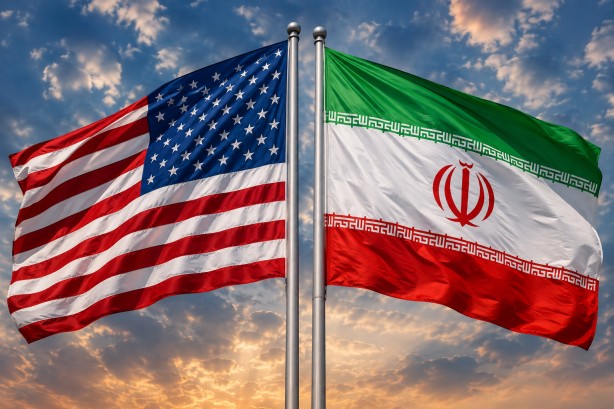
Escalating tensions between the United States and Iran have reached new heights following a series of military exchanges, marking the most significant confrontation since last month’s interim ceasefire agreement. The United States initiated an extensive airstrike campaign, targeting approximately 80 sites associated with Iran’s military infrastructure. This operation, according to U.S. officials, was intended to reduce threats to the freedom of navigation through the Strait of Hormuz. The strikes were in retaliation for Iran’s attacks on three commercial vessels traversing the crucial maritime corridor.
In retaliation, Iran fired missiles and deployed drones against U.S. military installations in Bahrain and Kuwait. Additionally, Tehran unveiled a new military strategy, declaring its intent to consider the United States and its regional allies as equivalent adversaries in any forthcoming conflicts. President Donald Trump responded by affirming that the United States was ready to undertake further military actions should Iran persist in its assaults. However, he later expressed a belief that the situation would not escalate into a prolonged war.
The recent surge in hostilities poses a severe threat to the fragile ceasefire, which had been established to pave the way for discussions focused on Iran’s nuclear program, potential easing of sanctions, and long-term security arrangements in the Strait of Hormuz. The truce was seen as a stepping stone toward more comprehensive negotiations.
Central to the renewed conflict is the disagreement over the regulation of shipping through the Strait of Hormuz. Iran asserts its right to manage passage through this strategic waterway, while the United States argues that Iran’s recent assaults on civilian vessels contravene international maritime security standards, warranting a military response.
The unfolding crisis has contributed to a rise in global oil prices amid growing concerns about the stability of one of the world’s most vital energy shipping lanes. The potential for disruptions along this route has heightened anxiety among international stakeholders and energy markets alike.