
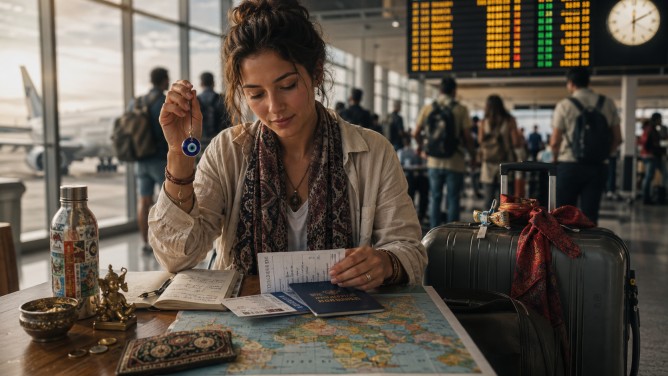
Traveling the world comes with its own set of charming traditions and beliefs that add a touch of magic to the journey. Across various cultures, travellers adhere to unique superstitions meant to usher in good luck and protection. These rituals, deeply rooted in cultural heritage, continue to be a part of travel experiences around the globe.
In the Balkans, for instance, a clove of garlic is often tucked into luggage to ward off negative energy and safeguard against misfortune. The practice reflects long-held beliefs in garlic’s protective properties. Similarly, some passengers adhere to the habit of touching or tapping the aircraft’s exterior before boarding, a ritual thought to bring good luck and alleviate the anxiety of nervous flyers. Adding to this, many believe that stepping onto the plane with the right foot first signals a fortuitous start to any journey.
Other customs aim to ensure a smooth and safe trip. In parts of the Middle East and the Balkans, families might pour water behind a departing traveller, symbolizing the hope for a seamless return. Meanwhile, numerology plays a significant role in travel superstitions, with numbers like 13, 4, and 17 considered unlucky in various cultures—potentially influencing choices like hotel room numbers or flight seats.
In Slavic tradition, sitting on packed luggage for a moment before departure is customary, offering travellers a pause to mentally prepare and collect their thoughts. Another intriguing belief is the avoidance of sweeping the floor immediately after someone leaves, as doing so is thought to sweep away the traveller’s good fortune and jeopardize their safe return.
While these customs lack scientific backing, they remain an integral part of the travel experience for many, serving to preserve cultural identity and family traditions. The excitement of embarking on a new journey is often enhanced by these age-old rituals, which, more than anything, connect people to their roots and shared beliefs across the world.