
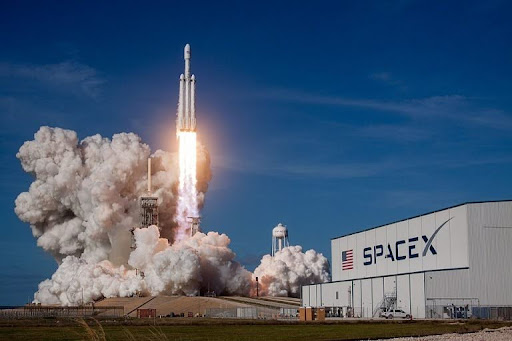
SpaceX has officially entered the public market, achieving one of the largest initial public offerings (IPOs) on record. The company’s shares began trading at $150 each, with the stock price soaring throughout the day. By the close of its first trading session, SpaceX’s market valuation exceeded $2 trillion. This monumental debut not only underscored the strong investor interest but also propelled CEO Elon Musk to a groundbreaking financial milestone, with his net worth now surpassing $1 trillion, making him the world’s first trillionaire.
The strong appetite from investors was evident as SpaceX’s shares surged, driven by enthusiasm for its innovative ventures in space exploration and satellite internet services. The company has consistently emphasized its ambitious vision to advance space travel and facilitate human settlement beyond Earth. Unusually, SpaceX opted for a fixed initial share price in its IPO, diverging from the traditional price range model. This decision, coupled with high pre-trading investor interest, contributed to the swift ascent in the company’s valuation once trading commenced.
Despite the impressive market debut, SpaceX faces challenges, as the company remains unprofitable according to its recent financial reports. These documents revealed substantial operating losses, though revenue figures continue to show growth. Analysts have attributed the financial strain to SpaceX’s significant investments in building out its aerospace infrastructure and expanding its satellite networks, which are seen as crucial to its future success.
With its unprecedented valuation, SpaceX’s entry into public markets has sparked discussions regarding market concentration and associated risks. The company’s vast scale and the considerable voting power held by Musk have been focal points of this debate, highlighting potential implications for the broader market.